
5 Reasons Teachers and Parents Should Consider an AI Tutor Right Now
Science already proved that one-on-one tutoring is the gold standard of learning. Now AI is making it affordable for everyone. Here are 5 reasons to try an AI tutor for your students today.

All right, let's get into it. If you are a teacher, you already know the reality. You have 25 or 30 kids in one room, and every single one of them learns differently. Some got it on the first pass. Some need to hear it three more times. And a handful are sitting in the back quietly lost, and there is no way you can reach all of them at once. Tech is hard, and the way we've structured classrooms makes this problem even harder. But the research is finally catching up to what teachers have known for decades. Boom.
Back in 1984, a researcher named Benjamin Bloom ran a study that confirmed what great teachers already felt in their gut. He found that students who got one-on-one tutoring combined with mastery learning (where you have to master a topic before moving on) outperformed 98% of their peers in a normal classroom. He called this the Two Sigma Effect. The problem? Hiring a private tutor for every kid costs more than any school or family can afford. For 40 years, we had the answer but not the budget. Trust, that gap hit communities like ours the hardest.
Now, AI is changing that math. Here are five reasons teachers and parents need to pay attention to AI tutoring right now.
Reason 1: Your Students Learn More in Less Time
In 2025, Harvard University ran a real randomized controlled study with 194 physics students. Half got a traditional classroom session with an experienced instructor. The other half used a custom AI tutor built on GPT-4. The AI group had median test scores of 4.5 versus 3.5 for the classroom group. But here is the part that really matters for a teacher who is stretched thin: the AI students finished the same material in 49 minutes versus 60 minutes in the classroom. More learning. Less time. That is the definition of working smarter. Good to go.
Reason 2: Every Student Gets Immediate Feedback (Not Just the Loud Ones)
One of the biggest reasons the original Bloom study worked so well wasn't just the tutor. It was the constant feedback loop. Every student had to score 80% or higher before moving on. If they missed it, they got corrective feedback and tried again. In a normal classroom of 30 kids, most students go a whole week before they even find out they misunderstood something. AI tutors close that gap in real time. Every student gets the feedback the second they need it, not days later when it's too late to course-correct.
Reason 3: It Asks Questions Instead of Giving Answers

A lot of people worry that AI will just do the work for the student. Man, the good ones are specifically designed to not do that. Well-built AI tutors use what researchers call Socratic refusal. Instead of handing over the answer, the tool asks the student a leading question that pushes them toward the solution themselves. It breaks big problems into small, manageable steps. It encourages the student when they get something right. It acts like a patient coach, not a search engine. That is the same scaffolding that Bloom found so powerful in 1984, and now it is available at scale.
Reason 4: Students Show Up More Motivated
This one surprised researchers too. In the Harvard study, the AI-tutored students reported higher engagement scores (4.1 versus 3.6) and higher motivation scores (3.4 versus 3.1) compared to the students in the traditional classroom. Why? Because the AI meets the student exactly where they are. It never makes a student feel embarrassed for asking a question. It never moves too fast or too slow. When a student feels seen and supported, they lean in. That is not magic. That is what good teachers have always known. AI just makes it possible for every student to feel that way, not just the ones who raise their hand.
Reason 5: Your Students Who Are Furthest Behind Benefit the Most
The Two Sigma Effect was not about gifted students. Bloom's original study used average students who had been written off as unremarkable. That is the whole point of the research. The gap between a struggling student and a thriving one is often not about intelligence. It is about access to the right kind of support at the right moment. AI tutoring gives your most underserved students the same quality of personalized attention that wealthy families have always been able to buy. If your school serves kids who never had access to private tutoring, this levels the field. That matters. Trust.
The Bottom Line for Teachers and Parents
You do not have to wait on a district budget, a grant, or a committee decision to start exploring this. Tools like Khan Academy's Khanmigo and Claude for Teachers are free or low-cost entry points that are available right now. The science says they work. The data says students leave more motivated. And the equity argument says your kids deserve this as much as any private-school student does.
Just try it once with one unit, one class, or one struggling student and see what happens. Holla at me if you want help setting up an AI learning pilot for your classroom or organization. Let's keep it moving. 🏠
Frequently Asked Questions
What is the Two Sigma Effect and why should teachers care?
It is a 1984 finding by Benjamin Bloom showing that one-on-one tutoring combined with mastery learning moves an average student from the 50th to the 98th percentile. Teachers care because AI is making this level of personalized support scalable and affordable for every classroom. Trust, this changes the game.
Will an AI tutor just do my student homework for them?
Not if it is built right. Well-designed AI tutors like Khanmigo or Claude are programmed to refuse to give direct answers. Instead, they ask the student leading questions and guide them to the solution themselves. It is Socratic coaching, not a shortcut. Good to go.
How do I get started with an AI tutor for my students?
Start simple. Khan Academy Khanmigo and Claude for Teachers are both free or low-cost entry points available right now. Pick one unit or one struggling student, try it for a week, and see what happens. Something is better than nothing. Holla at me if you need help setting it up.
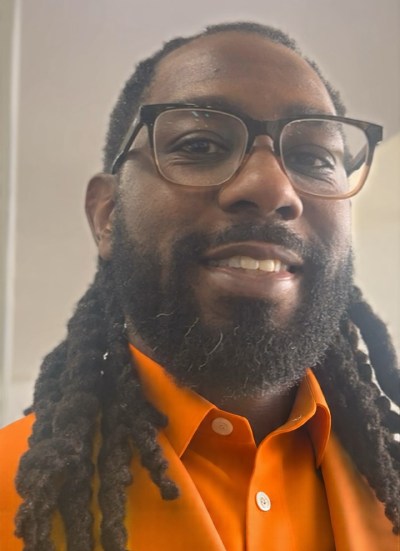
Written by Manasseh Lee
Founder, HiTek Tech · K-6 Technology Teacher · DeSoto, TX
Manasseh Lee teaches K-6 technology by day and builds AI systems for DFW businesses by night. MBA from Texas A&M Commerce, BS in Computer Science, and 20+ years in education and tech. He helps small business owners, churches, and nonprofits use AI without the stress.
You Might Also Like


Need Help With This?
Whether you need a quick fix today or a full AI strategy for tomorrow, I'm here to help. No jargon. No judgment. Just results.
Book Your Free Growth Call